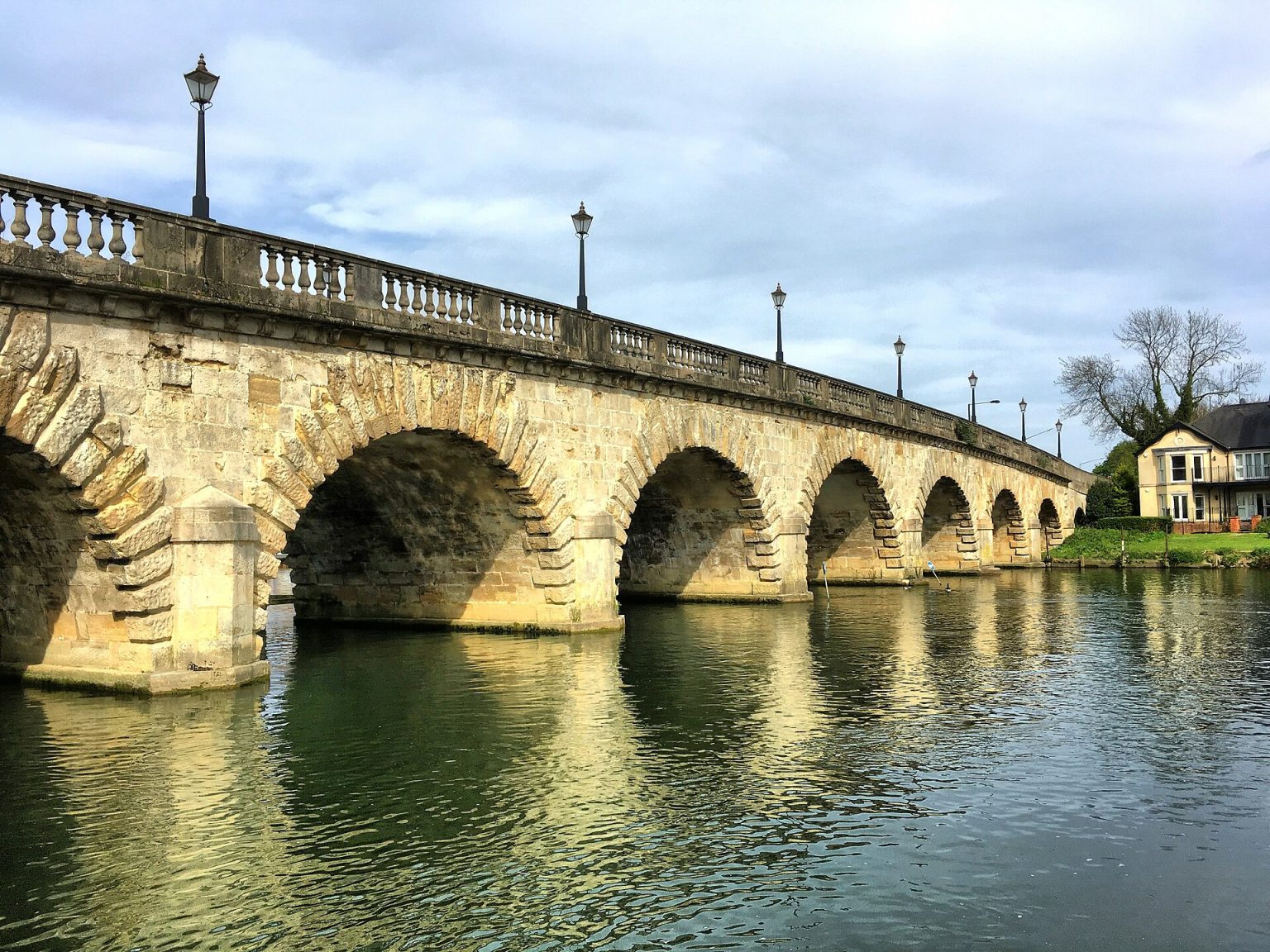
Maidenhead grew up where the main road west from London crossed the River Thames. Almost everything in its story follows from that crossing: the medieval bridge that gave the town its trade, the coaching inns of the High Street, Brunel’s railway bridge, and the Victorian and Edwardian years when Maidenhead became the fashionable place to spend a summer day on the river.
This page follows those eras in turn and ends with a dated timeline. Every date comes from a published source, listed at the foot of the page. For the two great crossings in detail, see Maidenhead’s bridges.
Why is it called Maidenhead?
Until the later 13th century the settlement was known as South Elington or Aylington. The Victoria County History says this name is supposed to have given way gradually to the later one after a new hythe, or wharf, was built on the river, bringing more trade and people to the little hamlet. The old name appears in the Bray court rolls for the last time in 1296.
The new name took a while to settle. The county history records Maydeheth, Maydeneth and Maidenhethe in the 13th century and Maidenhythe in the 14th, and the spelling Maidenhead appears in the 16th century. The county history ties the change of name to that new wharf.
What was here before the town?
People were here long before the bridge. The Heritage Centre’s oldest objects are about 4,000 years old, and the county history notes that Maidenhead is supposed to stand on the line of a Roman road, with remains of pit dwellings and a circular earthwork in Maidenhead Thicket.
At Cox Green a Roman villa of around AD 100 was discovered from aerial photographs in the 1950s and fully excavated in 1959, before the housing estate was built over it. Across the river, a 7th-century Saxon burial mound stands in the old churchyard at Taplow Court. Excavated in October 1883, it held an iron sword, spears, shields, drinking horns and a gold buckle set with garnets, and most of the finds are now in the British Museum.
The name Taplow comes from Old English for Taeppa’s mound, and the man buried there is thought to have been called Taeppa; the Heritage Centre dates the burial to 620. In 997 the Witan, the Saxon parliament, met at Cookham. Domesday Book in 1086 records Bray, Cookham and Elentone, the modern North Town, but not yet Maidenhead. See our Bray and Cookham guides.
How did a bridge make a town?
The Heritage Centre dates the first wooden bridge to about 1250, and with it the town began to grow. The county history explains why: the road to the west, which had crossed the river at Babham End and gone through Cookham, was diverted over the new bridge, through the hamlet of Maidenhead and on to the Thicket, where the roads to Henley and Gloucester and to Reading and Bristol divided.
Keeping the bridge standing was a constant worry. By 1297 it was much decayed, and Edward I granted pontage, a toll for its repair, for three years. In 1451, with the bridge very unsafe again, Henry VI licensed Thomas Mettingham, chaplain of a local chantry, to found a guild to maintain both his chantry and the bridge. The Heritage Centre counts this as the start of the town’s civic life.
The guild was dissolved with the chantry in 1547. The townspeople petitioned Elizabeth I to restore it, and in March 1582 she granted a charter of incorporation, with a weekly Monday market, two yearly fairs and a scale of bridge tolls. James I added a third fair in 1604, Charles II moved market day to Wednesday in 1663, and in 1685 James II raised the town’s warden to mayor. The Godayn seal was in use as the town seal by 1612.
What was Maidenhead like in the coaching age?
The Victoria County History puts it plainly: the chief trade of the town sprang from its position on the main roads to the west. Its inns are recorded from the 15th century. The Bull on the High Street is first named in 1459, when its keeper was accused of taking exorbitant gain, and the landlord of the Bear was presented for overcharging in 1489.
The Greyhound, first mentioned in 1636, stood on the north side of the High Street on the site of number 66. Charles I probably stayed there in 1642 and certainly did in 1647, when he met his children there, in what the Heritage Centre describes as his last meeting with them. The inn was destroyed by fire in March 1736.
Over the river, Rule, Britannia! was first performed at Cliveden in 1740. Then, in 1772, two big projects began. Upstream, Boulter’s Lock was built, the first pound lock on the middle Thames. In town, work started on a new stone bridge designed by Sir Robert Taylor and built by John Townsend of Oxford in Portland stone.
It opened to traffic in 1777 and still carries the A4 today. The Heritage Centre links the town’s prosperity in these years to the coaching trade, and the tolls paid off the cost of building the bridge.
How did the railway change Maidenhead?
The Great Western Railway was authorised in 1835, and its line from Paddington opened as far as Maidenhead on 4 June 1838. The first Maidenhead station was a temporary terminus on the Taplow side, east of the river, because the bridge was not yet finished.
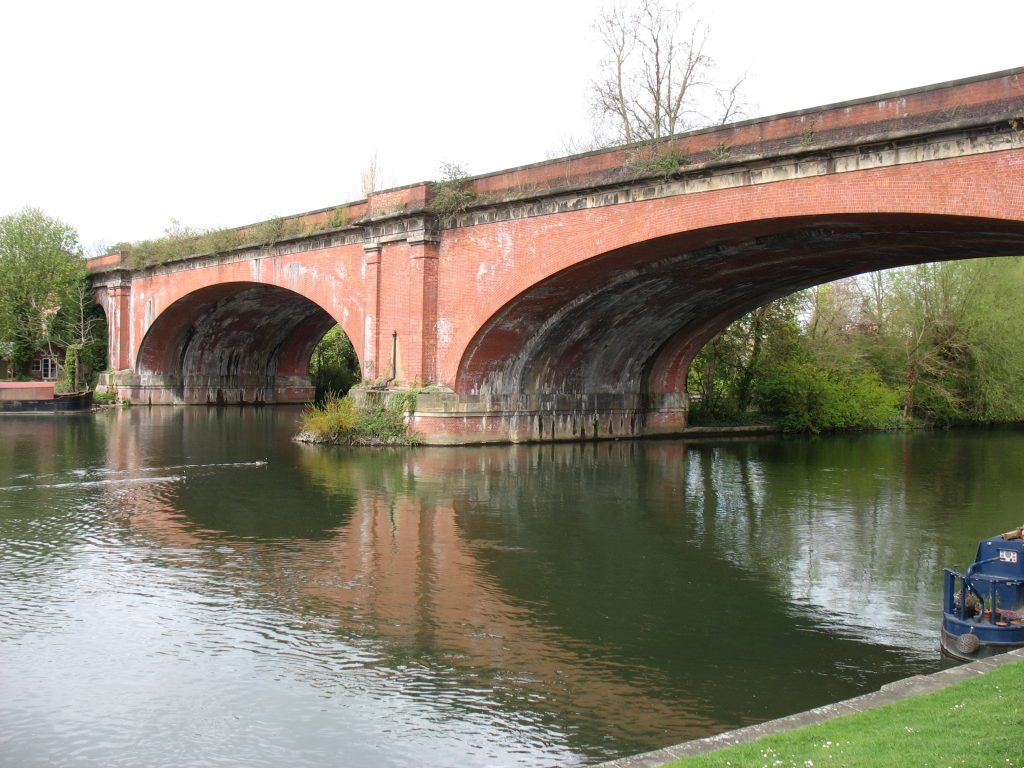
Isambard Kingdom Brunel’s answer to the river was a bridge built in brick between 1837 and 1839. To keep his line almost level, he crossed with two very shallow arches, each spanning 128 feet, and the Thames Navigation Commissioners allowed him only one pier in the river, which he set on a small island. The Great Western’s directors did not trust the design and insisted the timber centring stay in place.
Critics were sure the arches would fall into the river. Network Rail tells how Brunel quietly had the centring lowered, and the bridge stood. The first train crossed on 12 April 1839 and the bridge opened officially on 1 July 1839, which the Heritage Centre marks as the end of the coaching era. It survived the gales and floods of January 1840, and the doubts stopped.
More lines followed. The Wycombe Railway opened from Maidenhead to High Wycombe in 1854, and the present station opened on 1 November 1871 as Maidenhead Junction. Between 1890 and 1892 Sir John Fowler widened Brunel’s bridge for four tracks so carefully that it looks almost unchanged, and the last broad gauge track on the line was lifted in 1892.
Brunel’s bridge is known locally as the Sounding Arch, for its echo. Turner painted a train crossing it in Rain, Steam and Speed, first shown in 1844.
When did Maidenhead become a river resort?
With the railway came visitors, and Maidenhead became a fashionable Thames-side resort in the 19th century. In 1833 William Skindle bought the Orkney Arms by the bridge, on the Taplow bank, and renamed it Skindle’s. The Heritage Centre, which has an online exhibition about it, says Skindle’s played a central role in fashionable riverside Maidenhead for over 150 years.
Boulter’s Lock was the place to be seen. In 1891 one writer said it had been “happily and aptly named the ‘Ladies’ Mile of the Thames’”. Not everyone approved. Jerome K. Jerome, in Three Men in a Boat (1889), found Maidenhead “too snobby to be pleasant”, though he thought the reach beyond Boulter’s and Cookham locks “perhaps, the sweetest stretch of all the river”.
The river could also turn. The Heritage Centre records 1894 as the year of the greatest flood on record. In 1897 the town marked Queen Victoria’s Diamond Jubilee with the clock tower on Station Approach. In 1903 the tolls on Maidenhead Bridge were finally lifted, after Joseph Taylor of Eton pressed the Charity Commissioners to look into how the toll money had been used.
On 29 June 1912 the rebuilt Boulter’s Lock was opened by Lord Desborough, chairman of the Thames Conservancy. Our guide to the Thames at Maidenhead shows you what is still there to see.
What happened in the 20th century?
The First World War hit the town hard. The Heritage Centre records about 900 Maidenhead casualties from a population of around 13,000, and four Victoria Crosses awarded to local people. In 1927 Ivor Novello bought Redroofs at Littlewick Green as his country house.
White Waltham aerodrome opened in 1935, and from February 1940 to 30 November 1945 it was the headquarters of the Air Transport Auxiliary. Its 1,250 men and women from 25 countries ferried 309,000 aircraft of 147 types from factories to squadrons. The first eight women pilots joined on New Year’s Day 1940, and 168 women served in all. Of the 173 aircrew who died, 17 lie in All Saints’ cemetery in Maidenhead.
The Heritage Centre lists the severe flood of 1947, the year before Maidenhead rower Bert Bushnell won Olympic gold in the double sculls in London. Hammer made more than 80 films at Bray between 1950 and 1966.
In 1957 Stirling Moss drove a Vanwall to the first British win in the British Grand Prix since 1934, and the Fairey Rotodyne, a vertical take-off airliner, made its first flight. In 1961 came the Profumo affair at Cliveden and the completion of the Maidenhead bypass, 38 years after work had begun.
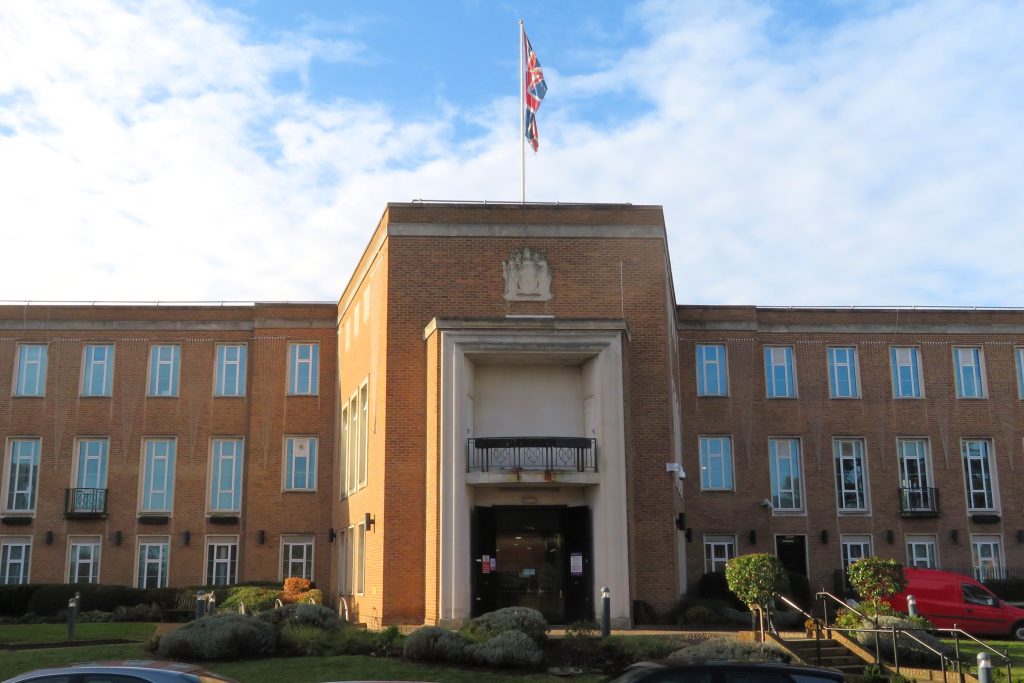
In 1972 relief roads named after the town’s twin towns in Germany, France and Italy were built, and the new library was completed. Two years later local government reorganisation replaced the Borough of Maidenhead with the Royal Borough of Windsor and Maidenhead. Skindle’s, the old resort hotel, closed in 1995; its site has since been rebuilt with homes and a restaurant.
What has happened since?
Maidenhead became a parliamentary constituency in 1997. The Jubilee River, an 11.6 km flood relief channel from Taplow to Datchet, opened in 2002, and the Heritage Centre records that it protected the town in the floods of 2003, the worst since 1947, and again in 2014 to 2015. In 2003 the library became the town’s first post-war listed building.
The new century brought medals and headlines. Cath Bishop won Olympic silver with Katherine Grainger in 2004, The Fat Duck at Bray was voted the best restaurant in the world in 2005, and in 2006 Brunel’s railway bridge appeared on a stamp for his bicentenary.
In 2012 Sophie Christiansen won three Paralympic gold medals, and a High Street postbox was painted gold for her; that July the railway bridge was listed Grade I. In 2016 Theresa May, MP for Maidenhead, became Prime Minister.
The railway story continues too. TfL Rail took over the stopping trains between Paddington and Reading on 15 December 2019, and since 6 November 2022 Elizabeth line trains have run straight through central London. In June 2026 the Nicholsons shopping centre closed so that its site can be rebuilt; see Maidenhead town centre for what comes next, and living in Maidenhead for the town today.
Maidenhead timeline
- About 4,000 years ago: the oldest objects in the Heritage Centre’s collection.
- About AD 100 to 400: Roman villa at Cox Green.
- 620: a Saxon chief, later linked with the name Taeppa, is buried at Taplow.
- 997: the Witan meets at Cookham.
- 1086: Domesday Book records Bray, Cookham and Elentone (North Town); Maidenhead is not yet named.
- About 1250: the first wooden bridge is built.
- 1296: the Bray court rolls use the old name South Elington for the last time.
- 1297: the bridge is much decayed; Edward I grants pontage.
- 1451: a guild is licensed to support a chantry and the bridge.
- 1459: the Bull on the High Street is the first inn recorded by name.
- 1547: the guild is dissolved with the chantry.
- 1582: Elizabeth I grants a charter of incorporation (March).
- 1612: the Godayn seal is in use as the town seal.
- 1647: Charles I meets his children at the Greyhound inn.
- 1685: James II raises the warden to mayor.
- 1736: the Greyhound is destroyed by fire.
- 1740: Rule, Britannia! is first performed at Cliveden.
- 1772: Boulter’s Lock is built and work begins on the stone bridge.
- 1777: the stone Maidenhead Bridge opens; the coaching trade brings prosperity.
- 1833: William Skindle renames the Orkney Arms Skindle’s.
- 1838: the Great Western Railway reaches a temporary Maidenhead station on the Taplow bank (4 June).
- 1839: Brunel’s railway bridge, the Sounding Arch, opens (1 July) and the coaching era ends.
- 1854: the Wycombe Railway opens from Maidenhead to High Wycombe.
- 1871: the present station opens as Maidenhead Junction (1 November).
- 1889: Jerome K. Jerome finds Maidenhead “too snobby to be pleasant”.
- 1891: the painter Stanley Spencer is born in Cookham (see the Stanley Spencer Gallery).
- 1894: the greatest flood on record.
- 1897: the clock tower marks Queen Victoria’s Diamond Jubilee.
- 1903: tolls on Maidenhead Bridge end.
- 1912: the rebuilt Boulter’s Lock is opened by Lord Desborough (29 June).
- 1914 to 1918: about 900 Maidenhead casualties; four Victoria Crosses to local people.
- 1927: Ivor Novello buys Redroofs at Littlewick Green.
- 1935: White Waltham aerodrome opens.
- 1940: the Air Transport Auxiliary makes White Waltham its headquarters.
- 1947: the most severe flood of the 20th century.
- 1948: Bert Bushnell wins Olympic gold in the double sculls.
- 1950 to 1966: Hammer makes more than 80 films at Bray.
- 1957: Stirling Moss wins the British Grand Prix in a Vanwall; the Fairey Rotodyne first flies.
- 1961: the Profumo affair at Cliveden; the Maidenhead bypass is completed.
- 1972: relief roads named after the twin towns; the library is completed.
- 1974: the Royal Borough of Windsor and Maidenhead replaces the Borough of Maidenhead.
- 1995: Skindle’s closes.
- 1997: the Maidenhead parliamentary constituency is formed.
- 2002: the Jubilee River flood relief channel opens.
- 2003: the worst floods since 1947, but Maidenhead is protected; the library is listed.
- 2004: Cath Bishop wins Olympic silver with Katherine Grainger.
- 2005: The Fat Duck at Bray is voted the best restaurant in the world.
- 2006: the railway bridge appears on a stamp for Brunel’s bicentenary.
- 2012: Sophie Christiansen wins three Paralympic golds; the railway bridge is listed Grade I.
- 2016: Theresa May, MP for Maidenhead, becomes Prime Minister.
- 2019: TfL Rail takes over the stopping trains to Paddington (15 December).
- 2022: Elizabeth line trains run direct into central London (6 November).
- 2026: the Nicholsons shopping centre closes for redevelopment (June).
Where can I find out more about Maidenhead’s history?
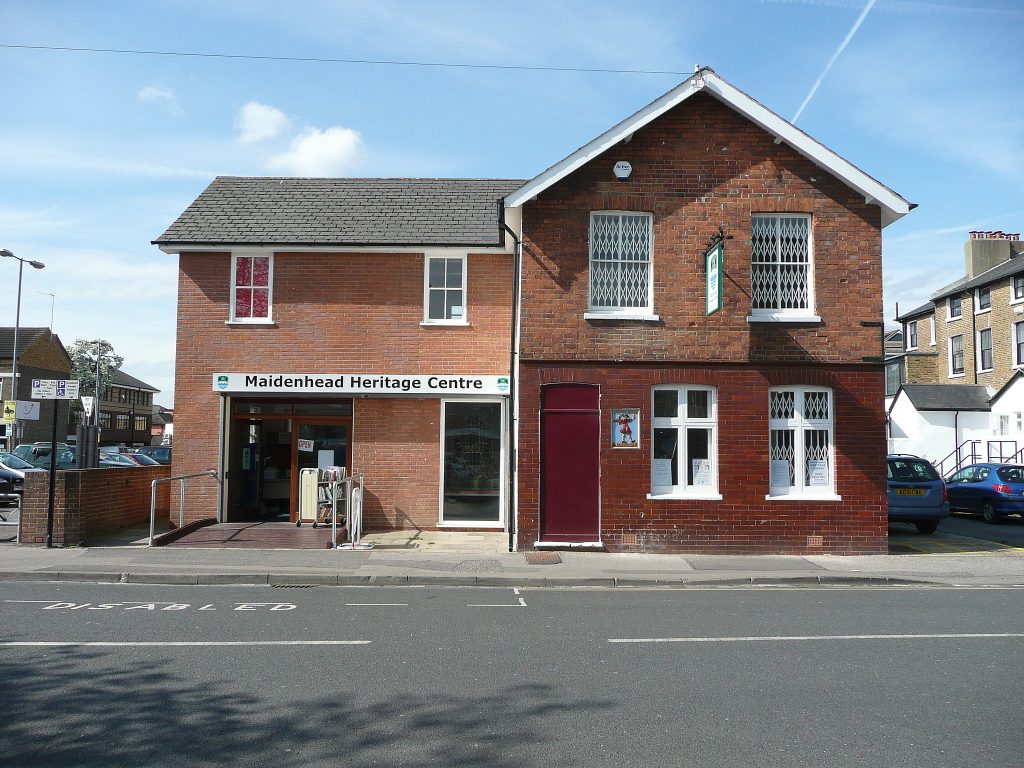
Maidenhead Heritage Centre, at 18 Park Street, is the town’s museum and archive, run as a registered charity. Its permanent exhibitions are the Story of Maidenhead and Grandma Flew Spitfires, about the men and women of the Air Transport Auxiliary, and it has a Spitfire simulator and a research service. Check the Heritage Centre’s website for opening times.
The library on St Ives Road also keeps a local studies collection. On this site, see famous people of Maidenhead, photographs of Maidenhead, the Thames at Maidenhead and where Maidenhead is. If you know something we should add, please contact us.
Photographs
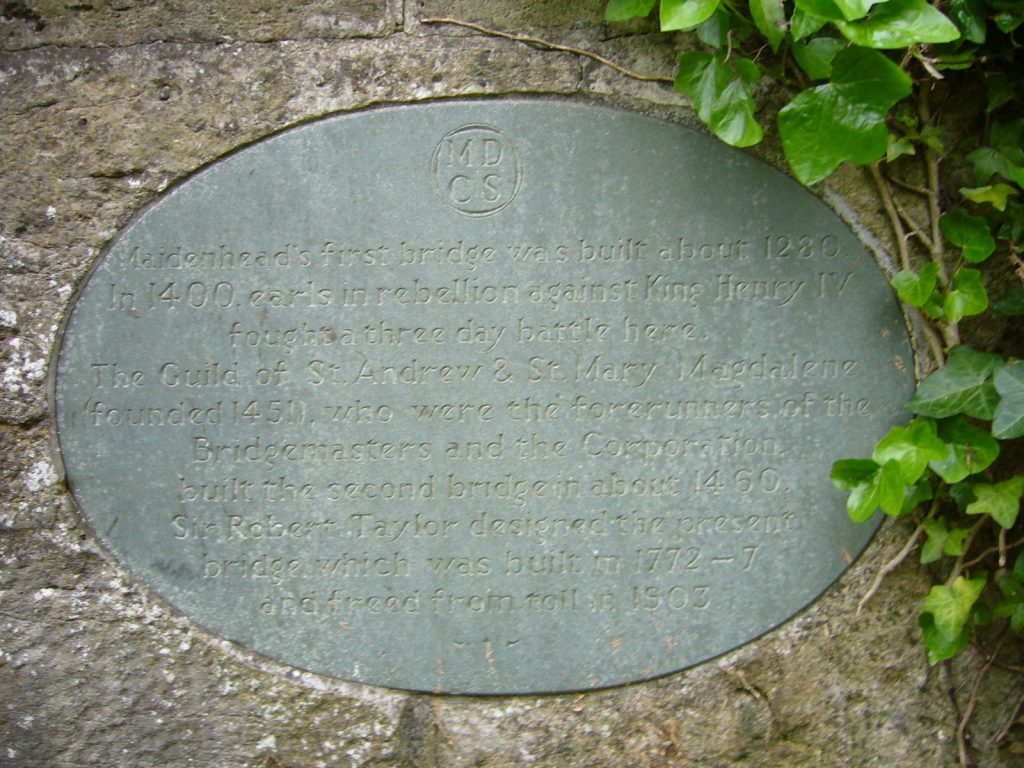
History Plaque on Maidenhead BridgeSean Davis, CC BY-SA 2.0 (Wikimedia Commons: History Plaque on Maidenhead Bridge) 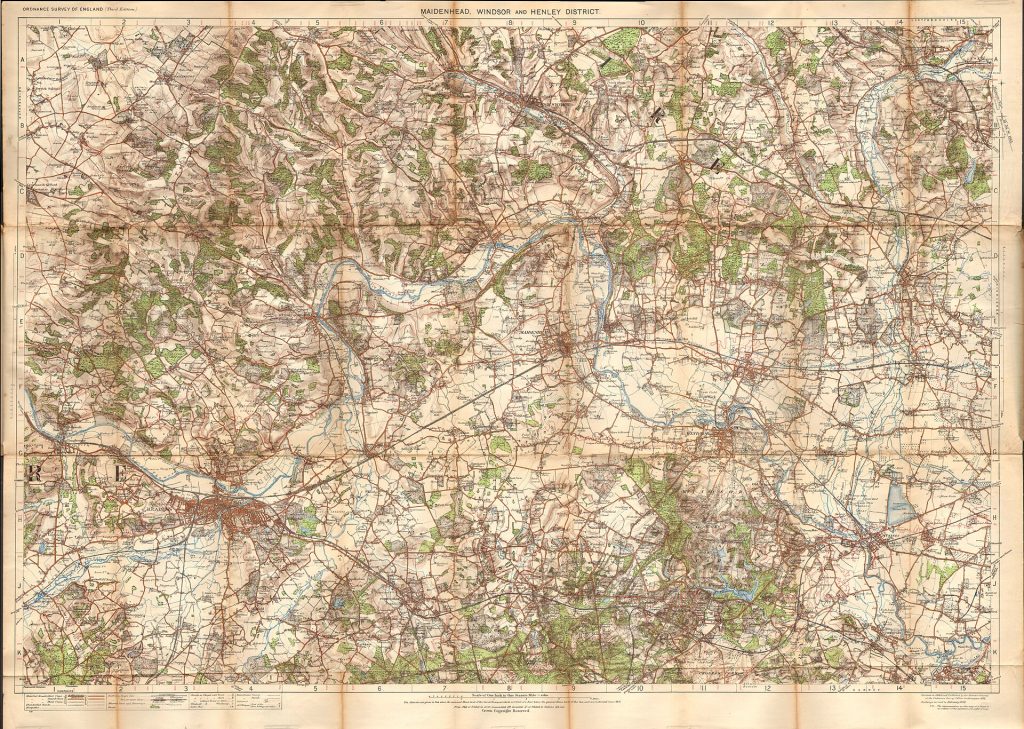
Ordnance Survey one-inch map of Maidenhead, Windsor and Henley, 1912Director General of the Ordnance Survey, UK, Public domain (Wikimedia Commons: Ordnance Survey one-inch map of Maidenhead, Windsor and Henley, 1912)