Maidenhead rewards anyone with a camera. In a single walk you can take in a Georgian stone bridge, Brunel’s brick railway bridge, Victorian church spires, a Jubilee clock tower and, as the light goes, the river turning gold below Boulter’s Lock. Old photographs show how much the town has changed, and how much is still there.
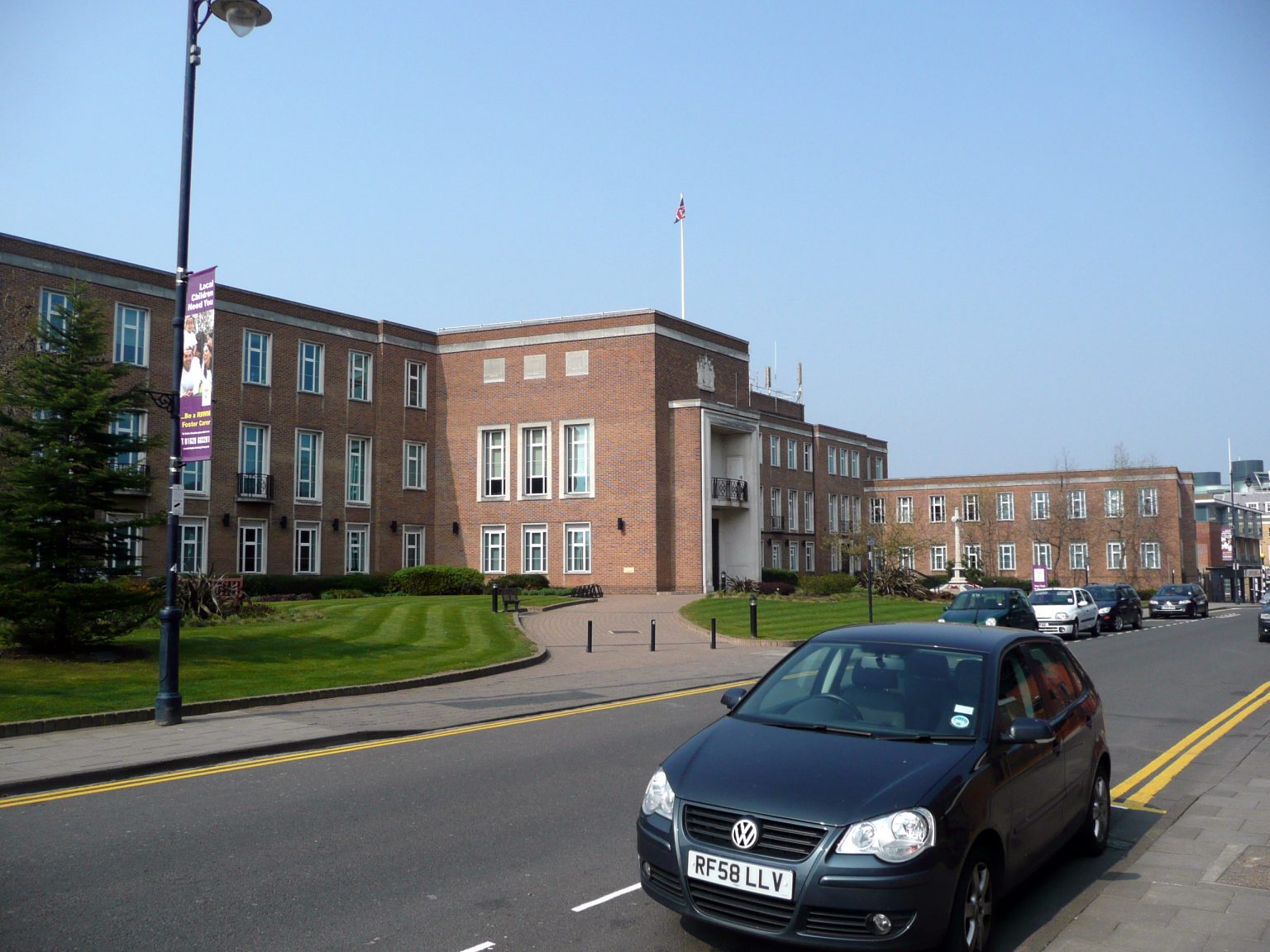
The nine photographs on this page come from the original Maidenhead Town website’s gallery. They show the High Street, the streets around it, one of the town’s churches and the Heritage Centre. Shops and signs change, so some of the businesses in the pictures may no longer be there. Further down you will find the best places to take your own photographs and where to look for old ones.
What do the photographs show?
The High Street
The original gallery captioned these three photographs as the High Street: a bronze statue on its plinth in the pedestrianised street, shoppers walking past the shop fronts with an office block behind, and a wet day beneath a corner building topped by a small domed turret.
The High Street is the oldest part of the town centre. It grew up after the first bridge was built, when the main road west was diverted through the hamlet of Maidenhead, and its medieval and Tudor inns served travellers for centuries. For the town centre today, see Maidenhead town centre.


Around the town centre
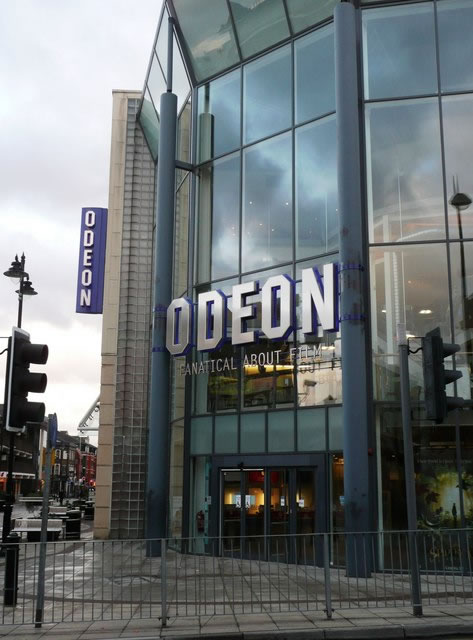
The next three pictures move off the High Street. The first shows the red-brick Post Office building, with its stone window frames and a red postbox outside. The second is an ornate red-brick building with domed corner turrets and a white bay window above the shops. The third is the glass front of the Odeon cinema, with its name in large letters over the entrance.
Look up above the modern shop fronts as you walk through town and you will spot plenty more old brickwork and turrets like these. The Odeon has its own page: see our Odeon Maidenhead guide.


St Luke’s, the Heritage Centre and a view over the town
St Luke’s Church stands on the north side of Norfolk Road. It was built in 1866 to 1870 to the designs of G. R. Clarke, and J. O. Scott added the tall spire in 1894. It has been listed at Grade II since 1983, and its spire is a landmark on the town’s skyline. The last photograph looks across the town’s trees to its church spires.
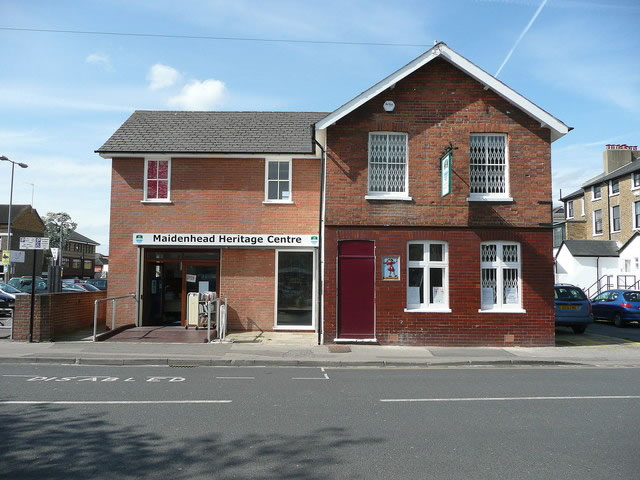
The Heritage Centre is on Park Street, in the building that was once the Cricketers Arms pub. The centre agreed to buy 18 Park Street in 2006, and the old pub has been the town’s museum ever since.


Where are the best places to take photographs in Maidenhead?
Maidenhead Bridge and the Sounding Arch
Start at the river. Maidenhead Bridge, which still carries the A4, was designed by Sir Robert Taylor and opened to traffic in 1777. It is built of Portland stone, with five arches over the river and four smaller ones on the approaches, and it is listed at Grade I.
A short way along the river is Brunel’s railway bridge, opened in 1839. Its two brick arches each span 128 feet with a rise of just over 24 feet, and the Heritage Centre says that if you stand on the towpath on the Taplow bank and clap, you can hear six or more echoes, which is why it is called the Sounding Arch. Turner painted a train crossing it in Rain, Steam and Speed. Our bridges guide tells the full story.
Boulter’s Lock and Ray Mill Island
A short walk upstream, Boulter’s Lock is the classic Maidenhead picture. The lock was built in 1772 and was the first pound lock on the middle Thames. Ray Mill Island beside it gives you the view from the water’s edge.
From September to April the council monitors the island and can close it for the day when the river is high, so check before a winter shoot.
The riverside and the Thames Path
Between the bridges and the lock, the riverside walk gives you one water view after another. Walk on along the Thames Path towards Cookham for open meadows and big skies. Our riverside guide has the route.
Winter Hill and Cookham
For a view over the whole valley, drive or walk up to Winter Hill above Cookham Dean. The Woodland Trust calls the view of the Thames from the car park a must see. Below it, the village of Cookham, home of the painter Stanley Spencer, makes a lovely subject in its own right; see our Cookham guide.
Cliveden
Across the river, Cliveden has formal gardens, statues and views down to the Thames. Lord Astor’s sculpture collection stands in the gardens, with the Fountain of Love on the Grand Avenue. Check the National Trust’s own rules before you bring a tripod or drone.
Town centre landmarks
- The clock tower: the Grade II listed tower on Station Approach was built in 1897 for Queen Victoria’s Diamond Jubilee, with a plaque, a drinking fountain on one side and a copper dome on top.
- Sir Nicholas Winton: on platform 3 of the station is the bronze of Sir Nicholas Winton, installed in 2010, showing him on a bench reading his scrapbook.
- All Saints, Boyn Hill: G. E. Street’s Grade I listed church of 1854 to 1857.
- St Luke’s: the spire on Norfolk Road, best seen against an evening sky.
Tips for photographing Maidenhead
- Check the river first. After heavy rain the towpath can flood and Ray Mill Island can close. Our weather and flood page has the links.
- Go early or late. The river is quietest at dawn, and the bridges look their best in low evening light.
- Be considerate at the lock. Keep clear of the lock edges and let boats and lock staff work.
- Ask before photographing people. Especially children, and anyone at work.
Where can I find old photographs of Maidenhead?
- Maidenhead Heritage Centre: its online catalogue can be browsed and searched, and where a photograph or scan exists it appears with the record; free registration lets you view images in detail. Its online exhibitions include Maidenhead from the air, 20 aerial photographs from the 1920s to the 1970s by Fairey Surveys, Aerofilms and others, as well as Town Centre 1964, Cold War Maidenhead and an exhibition on Skindles. The centre and the borough’s museums and libraries have also pooled their historical maps of Maidenhead, many of them large-scale Ordnance Survey sheets from the 1870s onwards. See the Heritage Centre’s collection pages and our guide to the Heritage Centre.
- Royal Berkshire Archives: the county archive at 9 Coley Avenue, Reading, RG1 6AF. Book before you travel, by phone on 0118 937 5132 or through its contact form, at least two working days ahead; there is no online booking. It opens Tuesday to Friday and is closed for stocktaking from 9 to 20 November 2026 (checked November 2026 on the archive’s Planning a Visit page).
For the story behind the pictures, see the history of Maidenhead, Maidenhead’s bridges and Boulter’s Lock and Ray Mill Island.
Can I use or share photographs of Maidenhead?
Check before you reuse an old photograph. The Heritage Centre says the material on its website is for viewing only and may not be reproduced without its explicit permission, and other archives set their own terms. Our photo credits page lists the sources of the images on this site.
If you have photographs of Maidenhead, old or new, that you would like to share on this page, please contact us.
Frequently asked questions
Where is the best view of Maidenhead’s bridges?
From the towpath on the Taplow bank, where you can see Brunel’s Sounding Arch and the stone road bridge of 1777 close by. Clap under the railway arch to hear the echo.
Where can I see old photographs of Maidenhead online?
The Heritage Centre’s online catalogue and exhibitions, including Maidenhead from the air and Town Centre 1964. The Royal Berkshire Archives in Reading holds county records that you can visit by appointment.
Can I use photographs from the Heritage Centre’s website?
Not without asking. The centre says its online material is for viewing only and may not be reproduced without its explicit permission.
Photographs
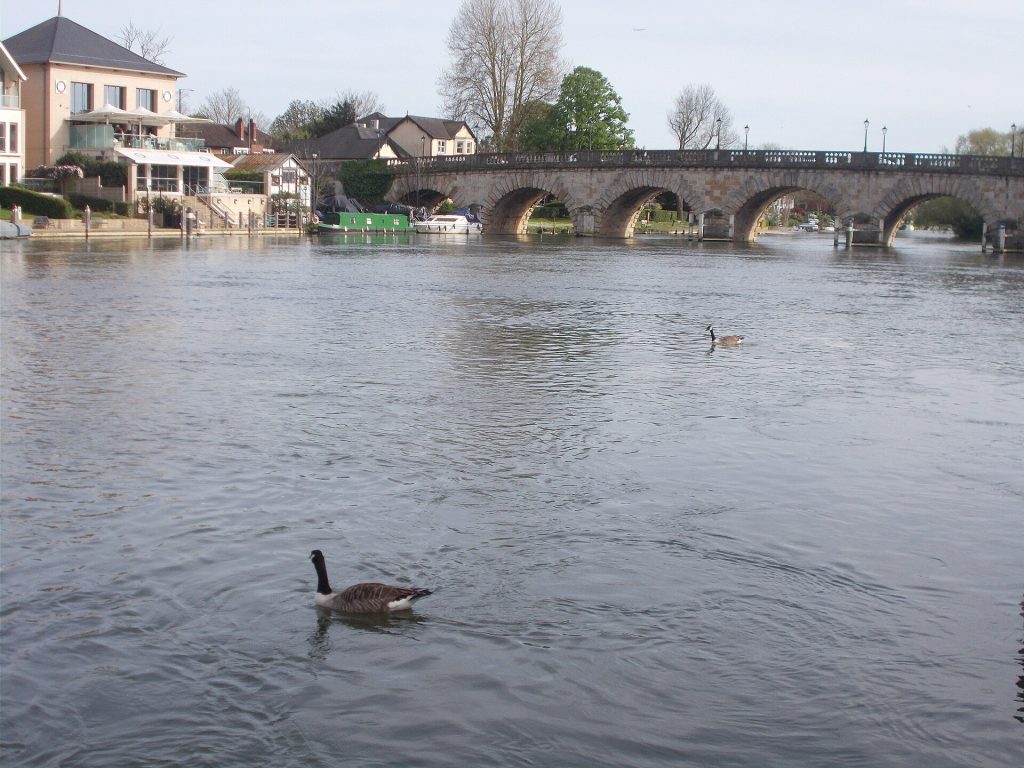
River Thames and Maidenhead BridgePeter S, CC BY-SA 2.0 (Wikimedia Commons: River Thames and Maidenhead Bridge)