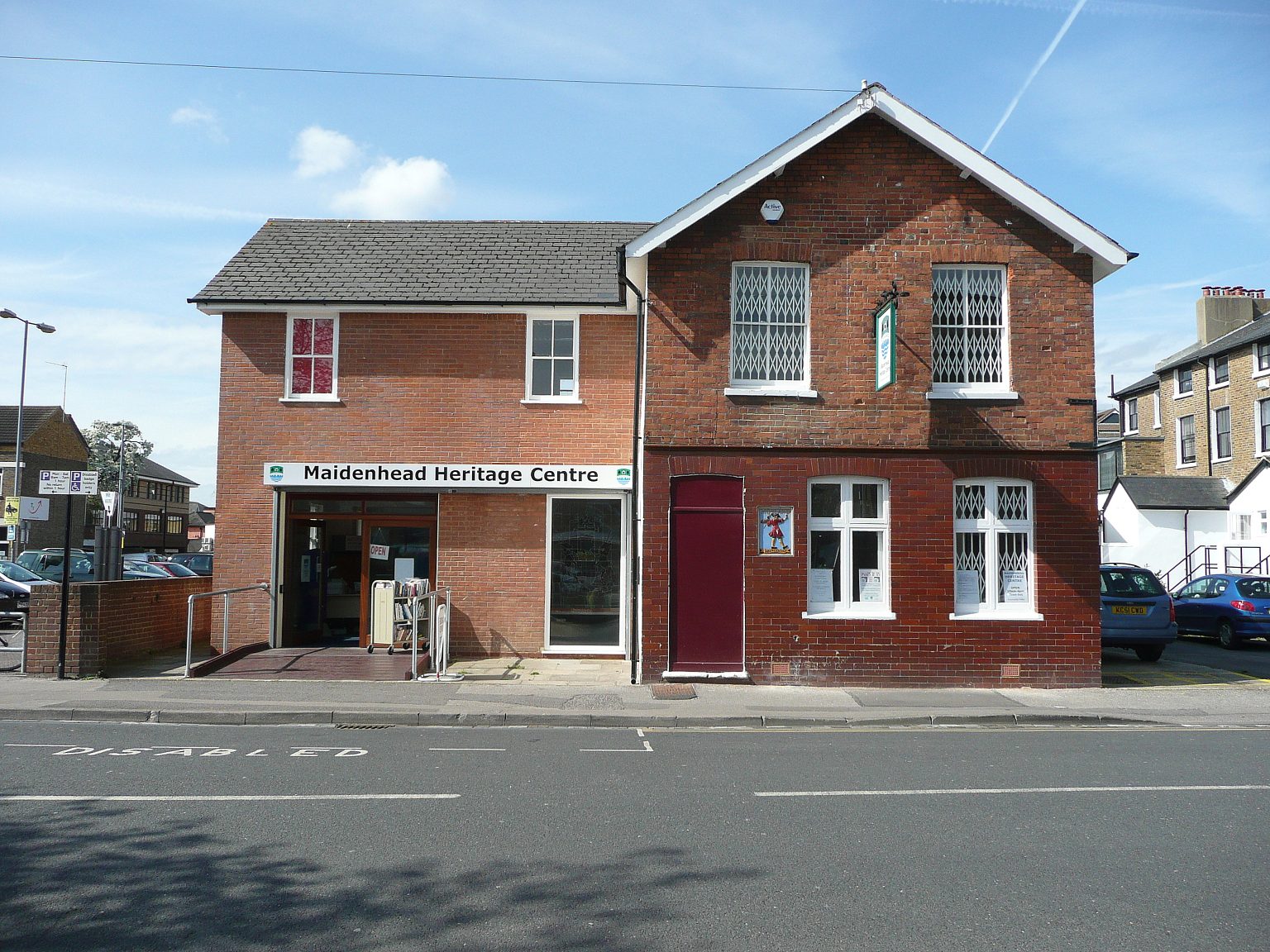
For a riverside town of its size, Maidenhead has been home to a remarkable cast. A stockbroker who lived here quietly for decades turned out to have rescued hundreds of children from the Nazis. An amateur astronomer found moons of Neptune and Uranus before settling in a house by the river here. A film star brought Hollywood glamour to Bray, a racing driver learned his craft on the village lanes, and the town’s MP became Prime Minister.
Some of these people lived in the town itself; others belong to Bray, Cookham, Taplow or Littlewick Green, and we say which in each case. For living people we give only public facts from published sources. For the wider story of the town, see the history of Maidenhead.
Which famous people lived in Maidenhead?
Sir Nicholas Winton (1909 to 2015)
In December 1938 Nicholas Winton, then a 29-year-old stockbroker, went to Prague and began organising the rescue of children from Czechoslovakia. Eight trains brought them across Germany and France to Britain. A ninth, due to leave on 1 September 1939 with about 250 children, never left, because Germany invaded Poland that day. The Maidenhead Heritage Centre records that 669 children were saved, and they became known as Nicky’s Children.
Winton and his wife Grete lived in Maidenhead for much of their married life and brought up their three children here. He was active in local life: he founded what became Maidenhead Mencap, stood for the town council in 1954 and was appointed MBE in 1983 for community services in Maidenhead. He was knighted in 2003, received the Czech Republic’s Order of the White Lion in 2014 and died on 1 July 2015, aged 106. He is buried at Braywick Cemetery.
A statue of him by the sculptor Lydia Karpinska, seated on a bench reading a book, is at Maidenhead station. It was unveiled in September 2010 by Theresa May, then the town’s MP. See Maidenhead train information.
William Lassell (1799 to 1880)
William Lassell was born in Bolton on 18 June 1799 and made his fortune as a brewer, but astronomy was his passion. With reflecting telescopes he improved himself, he discovered Triton, the largest moon of Neptune, in 1846; Hyperion, a moon of Saturn, in 1848, found at the same time in America; and Ariel and Umbriel, two moons of Uranus, in 1851. The Royal Astronomical Society gave him its Gold Medal in 1849.
In the 1860s he bought Ray Lodge, an estate by the river at Maidenhead, and built an observatory there to carry on his research. He died at Maidenhead on 5 October 1880.
Bert Bushnell (1921 to 2010)
At the London Olympics of 1948, rowed on the course at Henley, Bert Bushnell and Richard Burnell won gold in the double sculls, beating the favoured Danish crew by about a length and a half after rowing together for only around six weeks. Bushnell, a Maidenhead rower and marine engineer, had built motor torpedo boats in the war, and he stayed clear of his father’s boatyard at Wargrave so as not to lose his amateur status.
In the 1950s he built up a successful hire cruiser business on the river at Maidenhead. He was the last surviving British gold medallist of 1948, gave his medal to the River and Rowing Museum at Henley, and his story was told in the 2012 television film Bert and Dickie. The town’s rowing tradition carries on at Maidenhead Rowing Club.
Lord Desborough (died 1945)
William Grenfell, later Lord Desborough, was a generous benefactor of Maidenhead. A sportsman who rowed twice in the Boat Race, including the dead heat of 1877, he was an MP from 1880 to 1905, became a peer in 1905 and was president of the organising committee for the 1908 London Olympics. He was chairman of the Thames Conservancy Board for 32 years and High Steward of Maidenhead.
In 1897 he gave the town Grenfell Park to mark Queen Victoria’s Diamond Jubilee, and its unusual trees were grown from seeds he collected on his travels. Desborough Park and Grenfell Road are named after him too. His family home was Taplow Court, across the river; see Taplow Court.
Theresa May
Theresa May was the Member of Parliament for Maidenhead from 1 May 1997 to 30 May 2024. She was Home Secretary from 2010 to 2016 and Prime Minister from 13 July 2016 to 24 July 2019, and in 2024 she was made a life peer as Baroness May of Maidenhead. Locally, she unveiled the Winton statue in 2010, opened Taplow Bridge by Boulter’s Lock in 2018 and opened the first restored stretch of the Maidenhead Waterways on 14 March 2020.
Katherine Grainger and Kate Winslet
The Heritage Centre’s Hall of Fame includes two more living names. The rower Katherine Grainger, born in Glasgow in 1975, won Olympic silver medals in 2000, 2004 and 2008, gold in the double sculls at London 2012 and a fifth medal at Rio in 2016, aged 40, when, in the Centre’s words, she became Britain’s greatest female Olympian athlete. The actress Kate Winslet, born in Reading, studied drama at the Redroofs Theatre School in Maidenhead in the 1980s, before Titanic (1997) and an Oscar for The Reader (2009).
Famous names from Bray
Diana Dors (1931 to 1984)
Diana Dors, billed as Britain’s answer to Marilyn Monroe, settled in Bray in 1951 with her first husband, Dennis Hamilton, and her flashy American cars and glamorous life gave the village a taste of Hollywood. Villagers warmed to her. In 1955 she opened the Le Toucan coffee bar at the bottom of Maidenhead High Street, which became a favourite teenage haunt. She died in 1984. Our Bray guide covers the village.
Sir Stirling Moss (1929 to 2020)
Stirling Moss grew up in Bray, where his family lived on Monkey Island Lane, and his racing life began in 1938 when his father bought him an Austin 7 at the age of nine. He was a familiar sight speeding through the village, sharpening his skills. In 1957 he signed to drive the Vanwall, built by Tony Vandervell, who had moved his bearings factory to Maidenhead, and in 1958 Vanwall won six of the nine World Championship rounds. A crash at Goodwood on Easter Monday 1962 ended his racing career. He died on 12 April 2020.
Famous names from Cookham
Sir Stanley Spencer (1891 to 1959)
The painter Stanley Spencer belongs to Cookham, not the town. He was born there on 30 June 1891, in Fernlea, the family house on the High Street built by his grandfather. After lessons at home from his sisters, he went to the Maidenhead Technical Institute from 1907 and then to the Slade School of Fine Art in London from 1908 to 1912.
The village appears again and again in his paintings. The Resurrection, Cookham, painted between 1924 and 1927 and now at the Tate, was the centrepiece of his first solo exhibition in 1927, when The Times called it the most important picture by an English artist of the century. He died on 14 December 1959 at the Canadian Red Cross Memorial Hospital on the Cliveden estate. The Stanley Spencer Gallery opened in Cookham in 1962; see also Cookham.
Derek Meddings (1931 to 1995)
Derek Meddings was the special effects wizard behind Gerry Anderson’s puppet series, starting as an uncredited art assistant on Torchy the Battery Boy in 1957 and going on to design the Thunderbird machines for Thunderbirds. In films he shared a Special Achievement Academy Award for Superman (1978), was nominated for an Oscar for Moonraker and built the miniatures for GoldenEye, which is dedicated to his memory. The Heritage Centre records that he was living in Cookham when he died, aged 64.
Gerry Anderson and the puppets of Islet Park
Gerry Anderson (died 2012), the creator of Thunderbirds, began his television career in Maidenhead. In 1957 he founded AP Films with the cameraman Arthur Provis, based at first at Islet Park in Maidenhead, where the early puppet series The Adventures of Twizzle, Torchy the Battery Boy and Four Feather Falls were made. On Four Feather Falls he pioneered an early form of Supermarionation. In June 1959 the company moved to larger premises on the Slough Trading Estate, where Stingray, Thunderbirds and Captain Scarlet were made. He was appointed OBE in 2001.
Littlewick Green and Taplow
Ivor Novello (1893 to 1951), Littlewick Green
Ivor Novello was born David Ivor Davies in Cardiff on 15 January 1893. In 1914, at 21, he wrote the music of Keep the Home Fires Burning, which made him famous, and he went on to star as the title character in Alfred Hitchcock’s silent film The Lodger in 1927. After a contract with Gainsborough Pictures he bought a country house at Littlewick Green, near Maidenhead, and named it Redroofs.
After his death in London on 6 March 1951, Redroofs was sold, and in 1964 the Redroofs Theatre School moved in; it carries a blue plaque in his name. The Ivor Novello Awards for British songwriters were set up in his memory in 1955. See Littlewick Green.
Julian Grenfell (1888 to 1915), Taplow
The soldier and poet Julian Grenfell, Lord Desborough’s eldest son, was born in London on 30 March 1888; his family’s home was Taplow Court. Serving with the 1st (Royal) Dragoons, he was wounded by a shell on 13 May 1915 and died of his wounds at Boulogne on 26 May, aged 27. His poem Into Battle was published in The Times the day after his death, alongside the news of it. His brother Gerald was killed in July of the same year. See Taplow Court and Taplow.
Waldorf and Nancy Astor, Cliveden
In 1906 the Cliveden estate at Taplow was given to Waldorf Astor on his marriage to Nancy Langhorne, an American from Virginia. Nancy Astor went on to become the first woman to sit as a Member of Parliament, and in the 1920s and 1930s the couple’s guests at Cliveden were known as the Cliveden Set. In the First World War Waldorf built a hospital on the estate and gave it to the Canadian Red Cross. Our Cliveden guide tells the rest of the house’s story.
A highwayman on the Bath Road
Claude Duval (1643 to 1670)
Claude Duval was a highwayman born in Normandy who went to Paris to work at 14 and came to England in 1660. The Heritage Centre says many of his robberies took place on Maidenhead Thicket and the Bath Road. He was famous for his manners: in the best-known story he stopped a coach carrying a lady with £400, took only £100 and let her keep the rest on condition that she danced with him on the heath (story told on the Heritage Centre’s Duval page). He was caught drunk in a London pub and hanged at Tyburn in 1670, aged 26.
The Air Transport Auxiliary at White Waltham
The Air Transport Auxiliary was formed in September 1939 to ferry new and repaired aircraft from factories to the RAF, and it had its headquarters at White Waltham airfield, near Maidenhead, from February 1940 to 30 November 1945. About 1,250 men and women from 25 countries flew for it, including 168 women, the first eight of whom joined on New Year’s Day 1940. Between them they delivered about 309,000 aircraft of 147 types, and 173 aircrew died in service.
Among them was the aviator Amy Johnson, famous for her 11,000-mile solo flight to Australia in 1930. She flew for the ATA from White Waltham and was killed in 1941 when the Airspeed Oxford she was flying crashed into the Thames estuary; her body was never found. The Maidenhead Heritage Centre holds the ATA’s story in its exhibition Grandma Flew Spitfires. See the Air Transport Auxiliary in Maidenhead and White Waltham.
Frequently asked questions
Who is the most famous person from Maidenhead?
Many would say Sir Nicholas Winton, who saved 669 children before the Second World War and lived in Maidenhead for much of his life. Theresa May was the town’s MP for 27 years, three of them as Prime Minister.
Did Stanley Spencer live in Maidenhead?
No, in Cookham, a few miles up the river, although he studied at the Maidenhead Technical Institute. The gallery of his work is in Cookham village.
Where is the Nicholas Winton statue?
At Maidenhead station. It shows him on a bench reading a book and was unveiled in September 2010.
Which famous people lived in Bray?
The film star Diana Dors settled there in 1951, and the racing driver Sir Stirling Moss grew up there.
Where can I find out more?
The Maidenhead Heritage Centre keeps a Hall of Fame of more than 40 local people on its website, and its exhibitions cover the ATA and the town’s past. For more on the town, see Maidenhead’s bridges, photographs of Maidenhead and Bray. If you know of someone we should add, please contact us.
Photographs
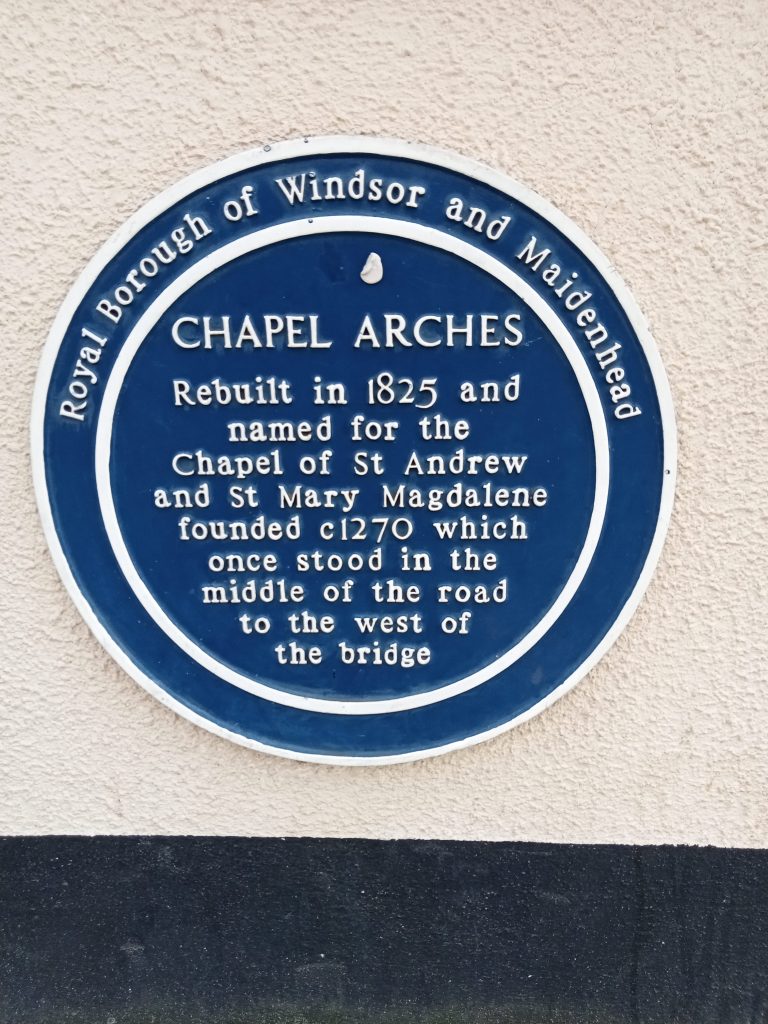
Blue Plaque in High Street, MaidenheadDavid Hillas, CC BY-SA 2.0 (Wikimedia Commons: Blue Plaque in High Street, Maidenhead) 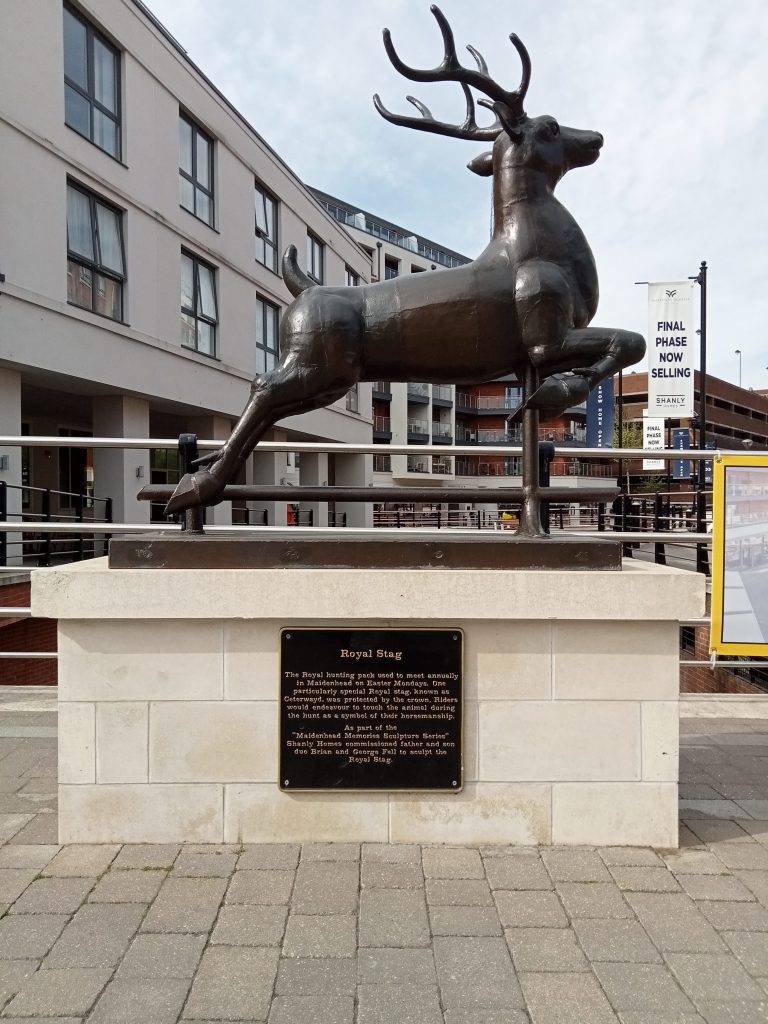
Statue of the Royal Stag in High Street, MaidenheadDavid Hillas, CC BY-SA 2.0 (Wikimedia Commons: Statue of the Royal Stag in High Street, Maidenhead)