Maidenhead exists because of a bridge. Before there was a crossing here, the main road west passed the town by; once a bridge was built, the road swung through the hamlet of Maidenhead and the town grew up around it. Today two great bridges stand a few minutes’ walk apart on the Thames: the stone road bridge of 1777, which carries the A4 to Taplow, and Isambard Kingdom Brunel’s brick railway bridge, the Sounding Arch, which still carries trains to London.
Both are listed Grade I, the highest grade. This page tells their story, explains the famous echo and Turner’s painting, and introduces the other crossings nearby, from Cookham’s iron bridge to a footbridge opened in 2018. We checked every fact against the sources listed at the foot of the page in November 2026.
When was the first Maidenhead Bridge built?
The Maidenhead Heritage Centre dates the first wooden bridge to about 1250, and says it was then that the town began to grow. The Victoria County History explains why: until the late 13th century the settlement here was known as South Ellington, and it was the building of the bridge, and the diversion of the western road over it through the hamlet of Maidenhead, that made the town grow.
Keeping a wooden bridge standing over the Thames was a constant struggle. By 1297 it had become much decayed, and Edward I granted pontage, a toll on people and goods crossing, for three years to pay for repairs. A hermit living at the west end of the bridge was expected to spend any spare income on mending the bridge and the roads. In 1451 the bridge was again very unsafe, and Thomas Mettingham, a chantry chaplain, was licensed to found a guild to maintain both his chantry and the bridge.
The guild was dissolved with the chantry in 1547. Elizabeth I’s charter of 1582, which incorporated the town, set a scale of tolls on goods crossing the bridge, meant for its repair. The bridge was broken down in the Civil War, and in 1714 the borough complained that its tolls had fallen because Queen Anne had built a free bridge at Datchet. The old bridge was repaired for the last time in 1750.
Who built the present Maidenhead Bridge?
The bridge you cross today was designed by Sir Robert Taylor and built under his supervision by John Townsend of Oxford, under an Act of Parliament of 1772. The foundation stone was laid on 19 October 1772, the centre arch was finished in 1775, and the bridge opened to traffic in 1777, at a cost of about £19,000 (see the bridge’s history).
Its Historic England list entry describes a bridge of Portland stone, with five arches over the river, smaller arches stepping down on the approaches, rusticated stone voussoirs, a moulded cornice and a balustrade. It was first listed on 27 February 1950 and is Grade I. In the coaching age it carried the main road west from London, and the Heritage Centre links Maidenhead’s prosperity in those years to the coaching trade.
When did the bridge tolls end?
The tolls charged to pay off the new bridge’s debt came to be treated as part of the town’s common funds, and they went on long after the debt had gone. They finally ended in 1903: the corporation agreed to stop collecting after 31 October, and in the first minutes of 1 November a large crowd took down the toll gates and threw them into the Thames. The Heritage Centre counts the lifting of the toll as the end of 750 years of charges at the crossing.
Who built Maidenhead railway bridge?
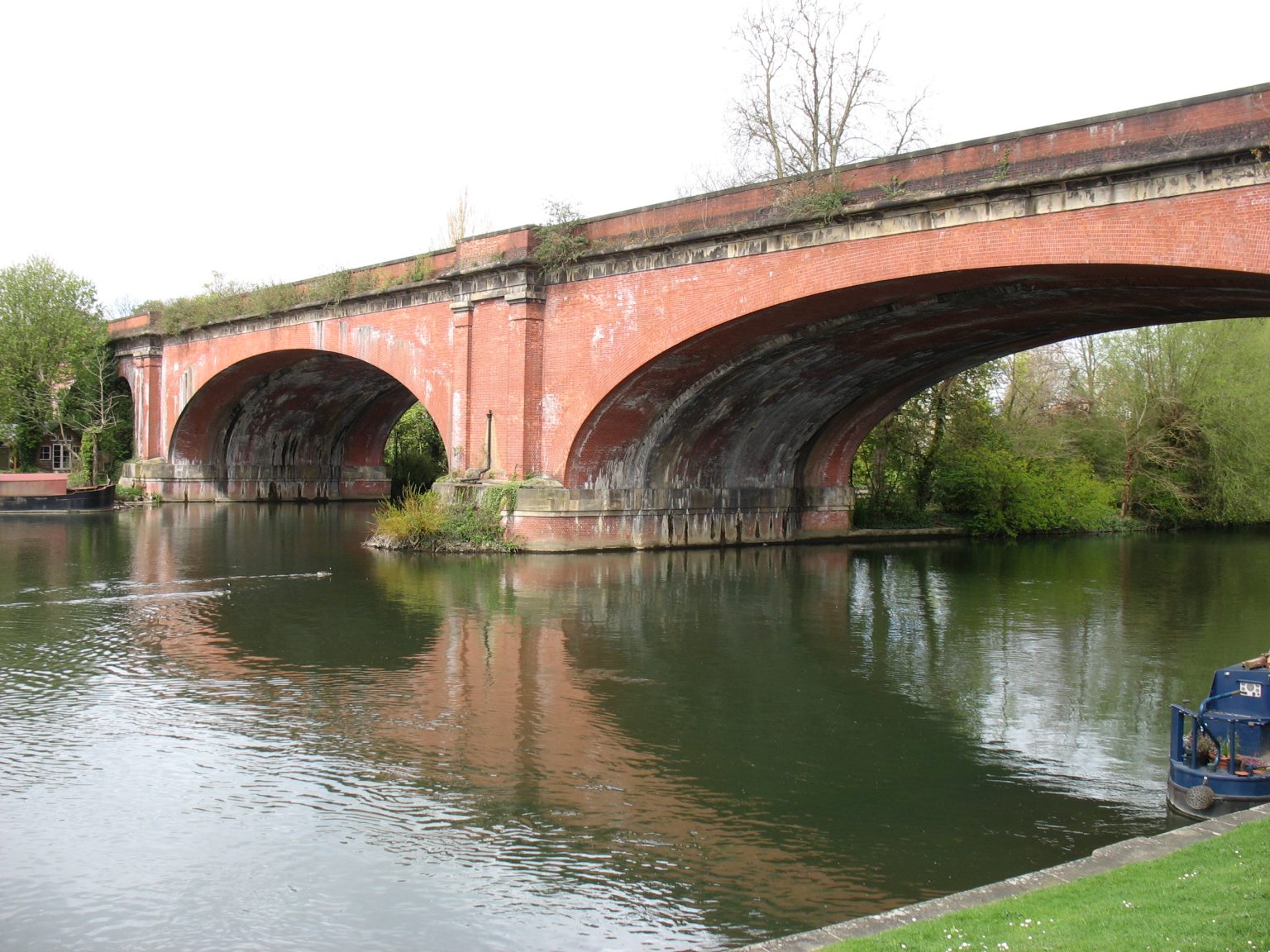
Isambard Kingdom Brunel (1806 to 1859) was in his late twenties when he became engineer to the Great Western Railway, and the Maidenhead bridge is one of his most celebrated designs. It was built between 1837 and 1839. The problem was the river: the Thames here is about 100 yards wide, and the Thames Commissioners insisted that the bridge must not block the navigation channel or the towpath.
Brunel’s answer was two very shallow brick arches, each spanning 128 feet (about 39 metres) and rising only about 24 to 25 feet (some 7.4 metres), with smaller semicircular flood arches on each bank. The bridge is 778 feet long and built of fine red brick with gritstone dressings from Bramley Fall. Critics were sure it would fall into the river. The line from London reached Taplow in June 1838, the first train crossed the bridge on 12 April 1839, and the official opening was on 1 July 1839.
The doubters were silenced in January 1840, when gales and floods raised the river and the bridge stood firm. Between 1890 and 1892 it was widened on both sides to carry four tracks, under the GWR engineer Lancaster Owen with Sir John Fowler as consultant, and the extensions copy the originals exactly, so you would hardly know. In the 2010s the bridge was adapted to carry the overhead wires for the electrified line, and Elizabeth line and GWR trains now run across it. See Maidenhead train information.
Is the railway bridge listed?
Yes, at Grade I. Its two halves were once listed separately at Grade II*, and in July 2012 the whole bridge was raised to Grade I. Historic England’s reasons describe it as one of Brunel’s most celebrated bridge designs and note its group value with the road bridge of 1777 beside it. Both list entries place the bridges in the parish of Taplow, across the river from the town.
What is the Sounding Arch?
The railway bridge is nicknamed the Sounding Arch because of its echo. The Thames towpath runs under the arch on the Taplow bank, and the Heritage Centre says that if you clap your hands under it you should hear six or even more echoes come back. It is one of the small pleasures of a riverside walk, and children love it.
The bridge was chosen for a stamp in 2006, when Royal Mail marked the bicentenary of Brunel’s birth. The Thames Path makes the arch an easy stop on a walk between Boulter’s Lock and Bray; see our guide to the Thames at Maidenhead.
Which bridge is in Turner’s Rain, Steam and Speed?
J. M. W. Turner’s Rain, Steam, and Speed: The Great Western Railway (1844) shows a steam train coming towards you as it crosses the Maidenhead railway bridge in the rain. The National Gallery, which owns the painting, explains that you are looking east towards London as the train heads west. Turner also brushed in a hare about halfway along the track. The paint has become transparent with age, so the hare is now hard to see, but it shows in an engraving of 1859.
The painting was first shown at the Royal Academy in 1844 and came to the nation through the Turner Bequest in 1856. You can see it in Room 40 at the National Gallery in London.
Where is the best place to see the bridges?
- From Guards Club Park, off Oldfield Road, which looks across to both the Sounding Arch and Maidenhead Bridge.
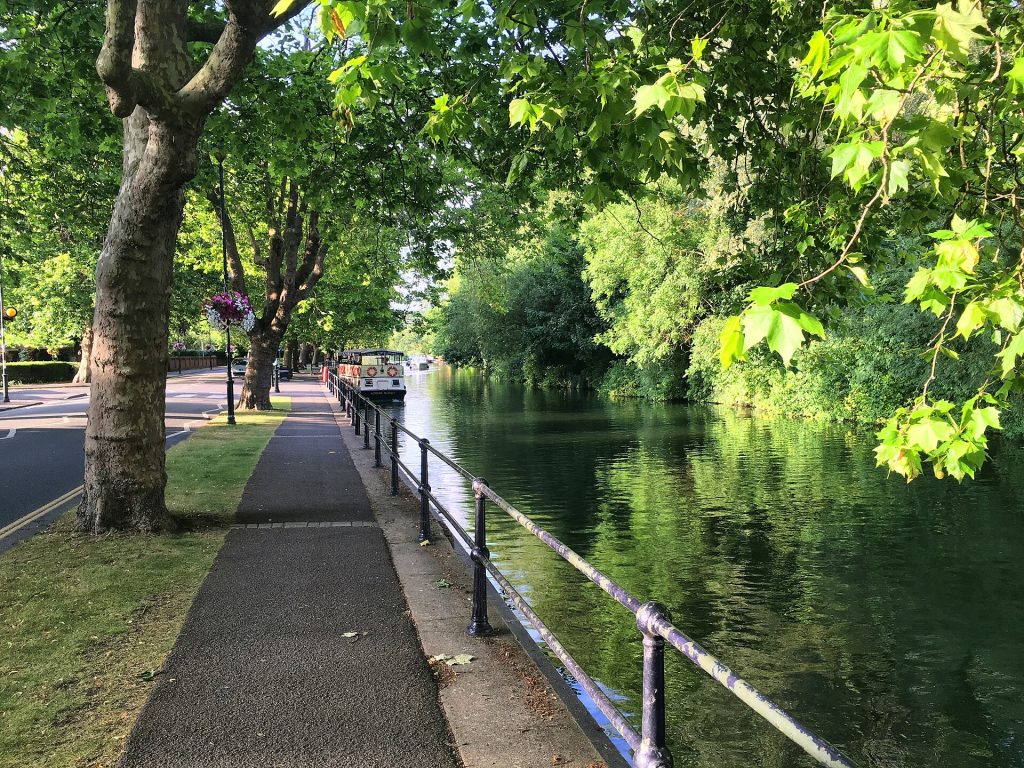
- From the towpath under the Sounding Arch on the Taplow bank, to try the echo.
- From Maidenhead Bridge itself, where the Thames Path crosses the river.
- From the river. Summer boat trips from Maidenhead to Windsor pass under both; see our French Brothers boat trips guide.
Our parks and walks guide includes a short bridges loop from the town centre.
What other bridges are there near Maidenhead?
Cookham Bridge
Upstream at Cookham, an iron bridge carries the road over the Thames to Bourne End. It opened on 1 July 1867, replacing a timber bridge of 1840, which itself replaced a long-standing ferry. The ironwork was made by Pease, Hutchinson and Co of the Skerne Iron Works in Darlington, whose plate still bears the date 1867. Tolls were taken for 107 years, until Berkshire County Council bought the bridge in 1947 for £30,000 and freed it (see Cookham Bridge’s history). It has been listed Grade II since 11 April 1972.
Bourne End Railway Bridge
A little further upstream, the Marlow branch line crosses the river at Bourne End. Brunel built the first bridge here in timber for the Wycombe Railway, opening in 1854; it was rebuilt in steel in 1895. A footbridge was hung off its side in 1992 to carry the Thames Path over the river, replacing the old towpath crossing by the Spade Oak ferry.
Taplow Bridge
The newest crossing is a steel footbridge, 35 metres long, over the weir stream beside Boulter’s Lock, landing on Ray Mill Island. It was built for the new homes on the site of the old Taplow paper mills, opened to the public in 2018 and was officially opened by Theresa May on 2 November 2018. It won a Chilterns Buildings Design Award in 2019. See our Boulter’s Lock and Ray Mill Island guide.
The M4 bridge at Bray
Downstream, the M4 crosses the Thames between Bray and Dorney Reach on a steel and concrete bridge built in the 1960s, about 500 yards above Bray Lock. A public footpath runs over it too: the 2016 order for the M4 smart motorway names public rights of way on the Thames Bray Bridge in Bray (footpath Bray 75/1, from Monkey Island Lane) and on the Dorney and Taplow side (see the order’s list of rights of way). It is one of only three bridges carrying a motorway over the Thames. Our Bray guide covers the village.
Frequently asked questions
How old is Maidenhead Bridge?
The present stone bridge opened in 1777. A crossing has stood here much longer: the Heritage Centre dates the first wooden bridge to about 1250.
Why is it called the Sounding Arch?
Because of its echo. Clap under the arch on the Taplow towpath and, the Heritage Centre says, you should hear six or more echoes.
When was Brunel’s bridge built?
Between 1837 and 1839. The first train crossed on 12 April 1839, and it opened officially on 1 July 1839.
Can I walk across the bridges?
You can walk over Maidenhead Bridge, Cookham Bridge, Taplow Bridge, the footbridge beside Bourne End railway bridge and the public footpath over the M4 bridge between Dorney and Bray. The railway bridge carries trains only, but the towpath passes beneath it.
Where can I find out more?
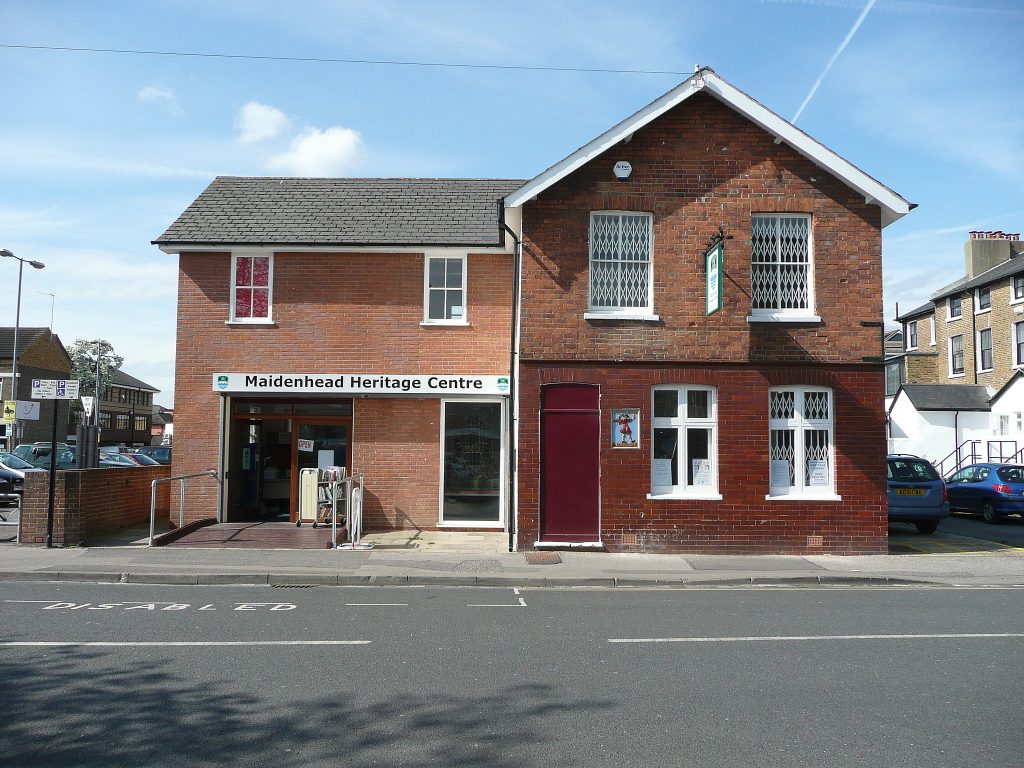
The Maidenhead Heritage Centre on Park Street tells the town’s story. See also the history of Maidenhead, photographs of Maidenhead and famous people of Maidenhead.
Photographs
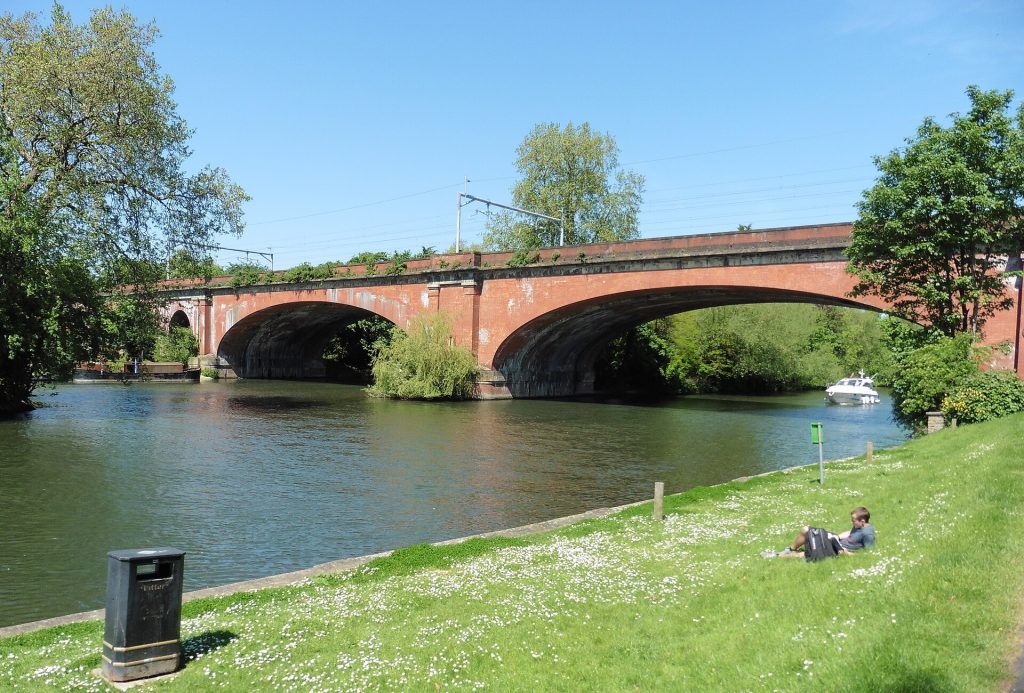
Brunel's railway bridge at Maidenhead from the Thames PathDave Kelly, CC BY-SA 2.0 (Wikimedia Commons: Brunel's railway bridge at Maidenhead from the Thames Path) 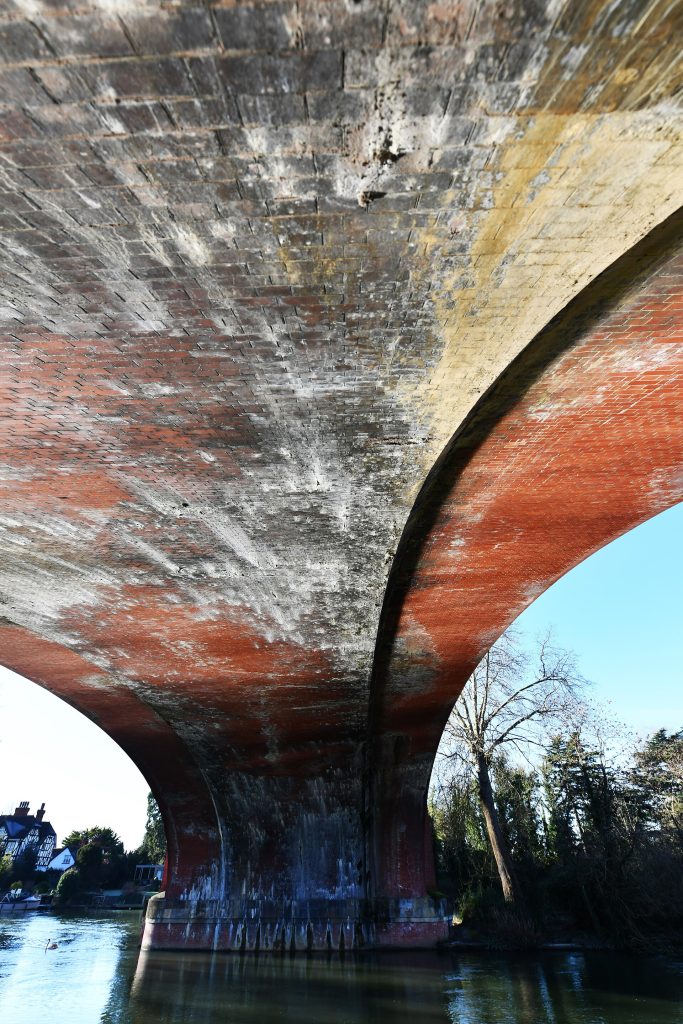
Maidenhead, Isambard Kingdom Brunel's railway bridge. 'The Sounding Arch'Michael Garlick, CC BY-SA 2.0 (Wikimedia Commons: Maidenhead, Isambard Kingdom Brunel's railway bridge. 'The Sounding Arch') 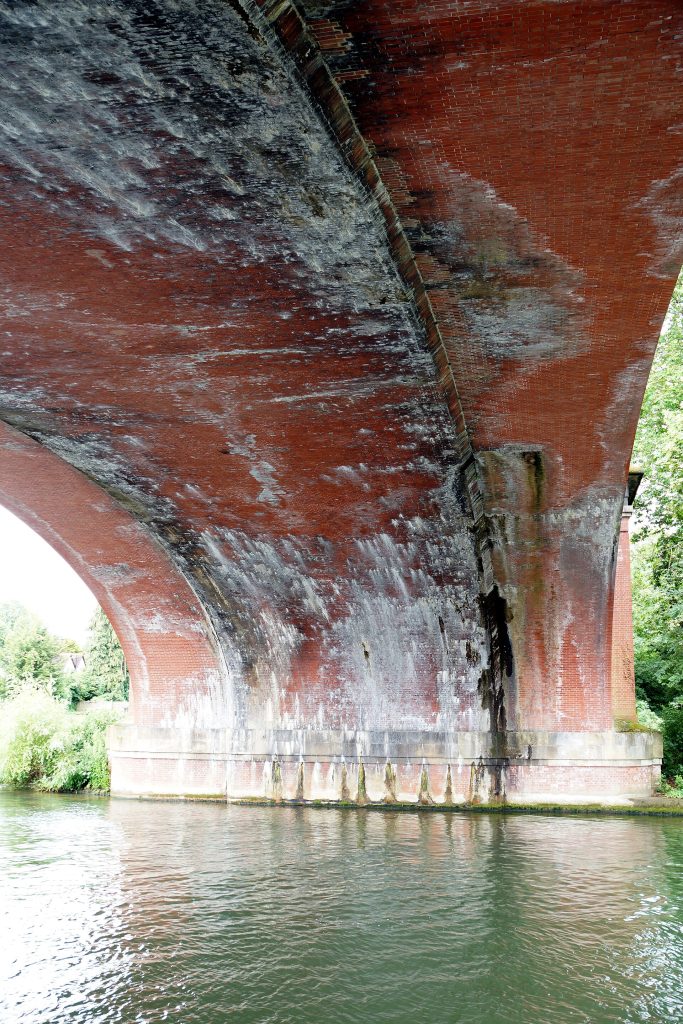
Under the Sounding Arch of Maidenhead Railway BridgeOosoom at English Wikipedia, CC BY-SA 3.0 (Wikimedia Commons: Under the Sounding Arch of Maidenhead Railway Bridge) 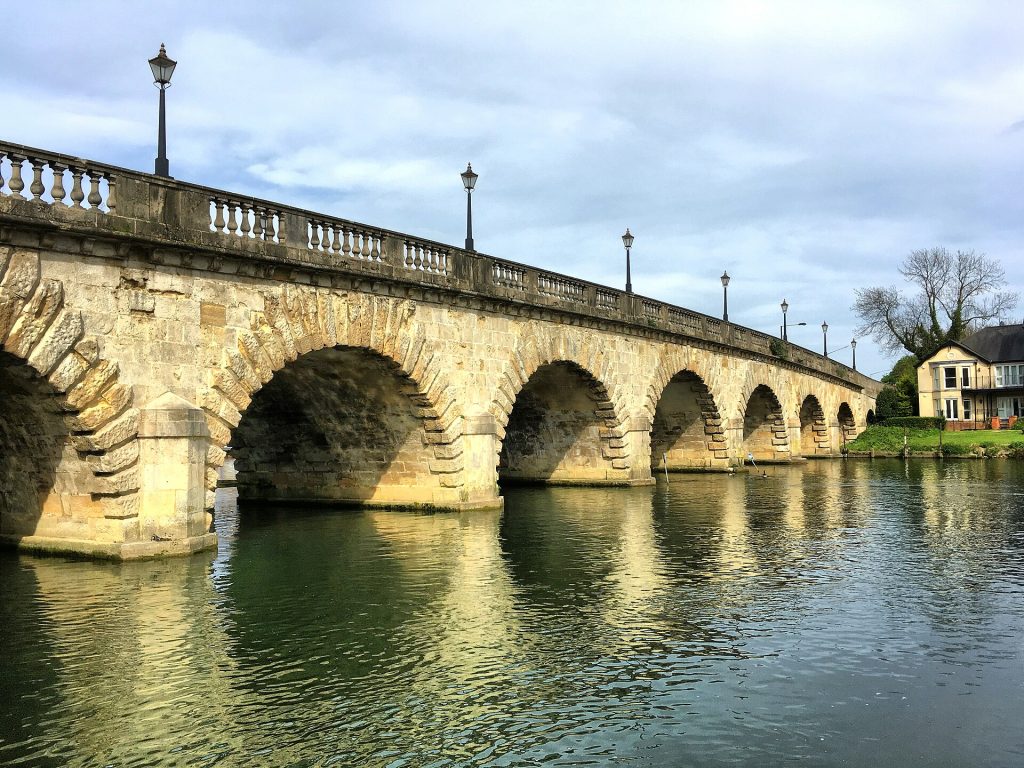
Maidenhead BridgeTimo Newton-Syms from Helsinki, Finland & Maidenhead, Berkshire, UK, CC BY-SA 2.0 (Wikimedia Commons: Maidenhead Bridge)